
Leapers has maintained steady and positive growth momentum throughout 2026. After completing a Pre-B+ funding round in the first half of the year, the company recently closed a Series B round of nearly RMB 100 million, with Shanghai-based Xinwei Capital joining as the new investor. The new funds will primarily be used to expand R&D of AIDC-related products and to drive global market expansion.
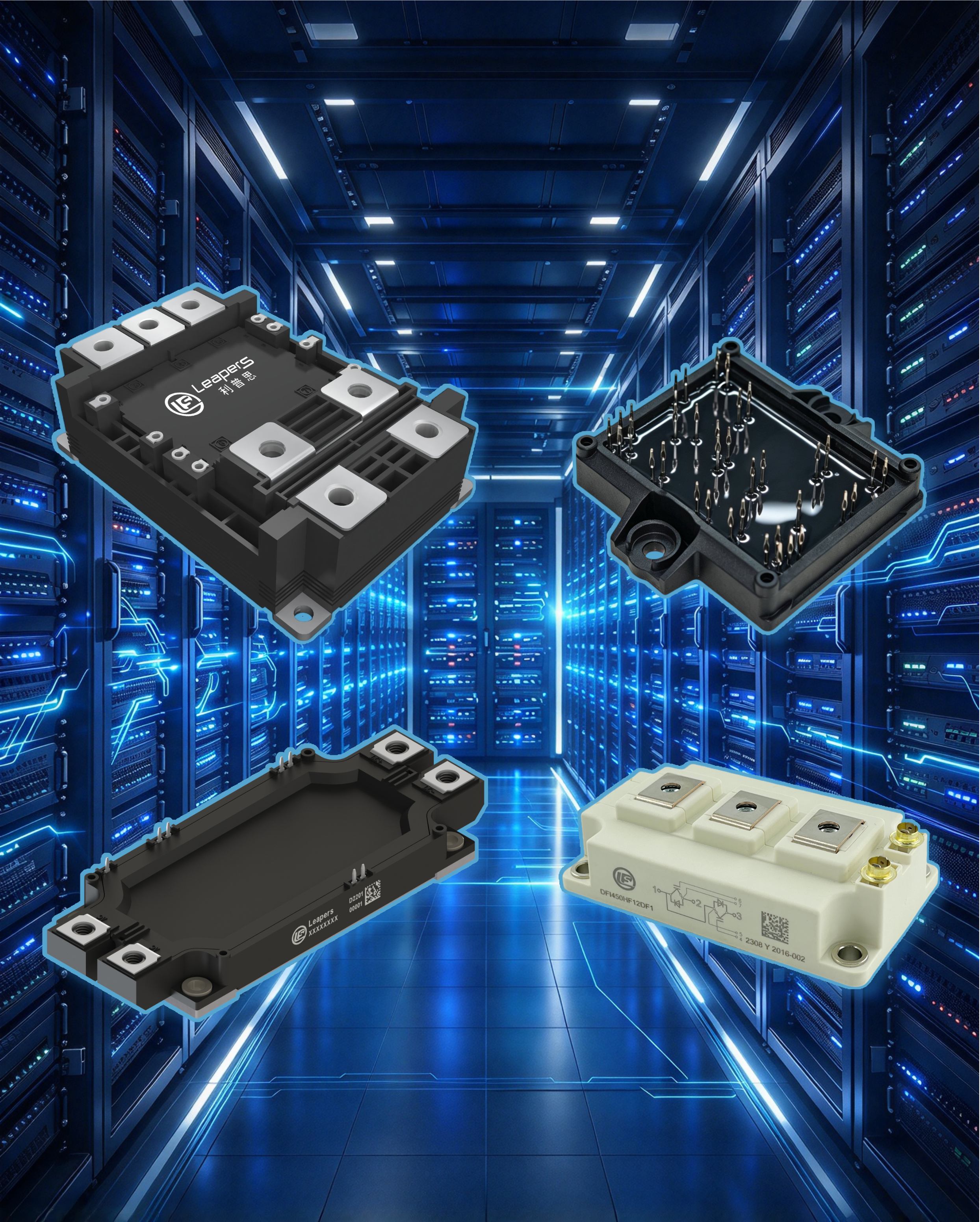
As AI data centers upgrade to 800V HVDC architectures, 800V high-voltage platforms become widely adopted in electric vehicles, and demand keeps rising for higher energy-conversion efficiency in solar-storage-charging systems, the value of silicon carbide (SiC) is becoming increasingly prominent in high-voltage, high-frequency, and high-temperature applications. Compared with conventional silicon-based devices, SiC offers higher switching frequency, higher breakdown field strength, lower switching losses, and higher conversion efficiency, making it one of the key foundational materials for upgrading energy infrastructure and building computing power.
According to Yole Group, the global SiC power device market was valued at approximately USD 3.4 billion in 2024 and is expected to approach USD 10 billion by 2030, representing a compound annual growth rate of about 20.3%. In China, the third-generation semiconductor power electronics market — covering SiC and GaN devices, dominated by SiC — was valued at approximately RMB 17.6 billion in 2024 and is pr ojected to exceed RMB 46 billion by 2029.
In terms of technology, Leapers has established a complete, independently developed forward-design system for SiC modules. It is the first domestic SiC power module manufacturer to adopt its own high-thermal-conductivity epoxy potting solution, and holds a number of proprietary intellectual property rights in reducing module parasitic inductance and losses, enhancing high-temperature and high-voltage endurance, and extending power-cycling lifetime, according to Ding Xuanming, Chairman and CEO of Leapers.
Today, Leapers' products are widely deployed in high-voltage electric drive systems for electric heavy trucks, construction machinery, marine vessels, and low-altitude aircraft, as well as in ultra-fast charging, wind-solar-storage, solid-state transformers (SST), solid-state circuit breakers (SSCB), variable-frequency drives, and rail transit power supplies.
Beyond these existing applications, AIDC are becoming a key new market for Leapers. The company has multiple SiC power module families ranging from 1200V to 3300V in customer sampling for AIDC-related applications, with some projects having entered the reliability-verification stage. Volume adoption of these products is expected to ramp up significantly in 2027.
In addition to the AIDC market, Leapers is also advancing packaging-technology innovation for next-generation power modules. At PCIM Europe in Germany this June, the company unveiled a new PCB-embedded SiC module solution that embeds chips directly inside the PCB, aiming to optimize electrical connections, reduce system-level stray inductance, and improve system integration. Around this direction, the company is also exploring the application of related technologies in the power-supply field.
Global expansion is another cornerstone of Leapers' business. The company has built an R&D and market network covering China, Japan and South Korea, Europe, and North America, with R&D centers in Wuxi, Shanghai, Shenzhen, and Japan, as well as an overseas sales center in Europe. Core members of its technology team come from NIO, Mitsubishi, Toshiba, Infineon, and onsemi, bringing deep experience in power semiconductor R&D, product application, and international market expansion. Overseas revenue now accounts for nearly half of the company's total.
On the capacity front, Leapers is accelerating the construction of its automotive-grade power semiconductor module fab in Yangzhou, which is expected to complete line integration and start production in April 2027, with an annual capacity of 1.5 million SiC modules once fully ramped. By then, the combined Wuxi and Yangzhou plants will reach an annual capacity of 2.2 million SiC modules, preparing Leapers for the coming surge in demand for third-generation power semiconductors.

Excerpts from the Conversation with Ding Xuanming
Q: How do AIDC scenarios change the requirements for SiC power modules? What stage have the related products reached?
Ding: The AIDC power supply chain consists of five stages: 10kV/35kV medium-voltage AC is converted directly to 800V DC through a SST, eliminating the line-frequency transformer, low-voltage UPS, and PDU; the 800V DC bus distributes power to racks via solid-state protection devices such as SSCBs, and can be connected directly to energy storage and battery backup units (BBUs) in place of traditional UPS; high-ratio LLC converters inside the rack step the voltage down to 54V/48V or a 12V intermediate bus; finally, board-level multiphase VRMs deliver 0.6–1.0V to GPU/CPU cores, with 5V/3.3V supplies for I/O and peripherals.
What we focus on is the segment from medium-voltage AC to 800V DC. The core equipment here is the SST conversion stage, working with SSCB protection on the 800V side. Under the high-frequency, high-temperature operating conditions of the medium-voltage side, the advantages of silicon carbide are most pronounced.
We have developed products across multiple voltage ratings — 1200V, 1700V, 2300V, and 3300V — and delivered samples to a number of leading customers at home and abroad, with some projects entering the reliability-verification stage. A single AIDC power system typically reaches several megawatts, which implies substantial demand for power modules. We are engaging power equipment manufacturers in China and overseas, and giving priority to projects with the opportunity to enter NVIDIA's supply chain.
That said, moving from sampling to volume procurement takes time. We expect the business to ramp up significantly around the fourth quarter of 2027.
Q: What is the company's roadmap for next-generation intelligent SiC PCB power modules? What are the technical advantages and challenges?
Ding: The idea behind PCB-embedded power modules is to eliminate bond wires and the discrete module housing, folding the packaging functions into the PCB stack-up — chips are embedded directly into the board, with three-dimensional interconnects formed by plated-copper microvias. This brings three major improvements: power-loop inductance drops from 10–20nH in conventional wire-bonded modules to 1–2nH, and module volume can be reduced by more than half; removing the bond wires also eliminates the dominant failure mode in power cycling, extending lifetime to several times that of conventional modules; and the symmetric stack-up structure is inherently suited to double-sided cooling.
The challenge lies not in electrical performance, but in thermal and mechanical stress. The coefficient of thermal expansion of SiC is about 4 ppm/K, versus 17 for copper and even higher for FR4. Under temperature cycling, interfacial shear stress concentrates at the bottom of microvias and at chip edges, leading to delamination, voids, and cracking — this is the real key obstacle to mass production. The next challenge is insulation and partial discharge above 800V: the embedded structure is compact, and the resin and microvia sidewalls are points of concentrated field stress. Heat dissipation itself, in contrast, can be addressed through solid copper columns and embedded silicon-nitride ceramics. One easily overlooked point: once inductance is pushed below 2nH, the rate of rise of short-circuit current becomes higher, compressing the protection window to within 1 microsecond — the gate drive and protection circuitry must be redesigned together.
As for the rollout sequence, we will anchor first in AIDC power supplies. Their 800V rating is the same as that of automotive 800V platforms, so the process can be reused — but certification cycles are shorter, iteration is faster, and continuous full-load operation is closer to real workloads, making it ideal for first maturing the process and yield, and then replicating it to automotive and power applications.
Investor's Perspective
Xinwei Capital: "As AI computing infrastructure expands and the construction of new power systems accelerates, the value of SiC modules is becoming increasingly prominent. With its independent forward design and advanced packaging technologies, Leapers' products excel under high-voltage, high-current operating conditions. The company has built a solid mass-production track record and customer reputation across power grid, heavy truck, energy storage, and industrial applications, and has successfully entered leading overseas supply chains. Xinwei Capital has built a full-chain portfolio in the power semiconductor sector — spanning materials, devices, packaging and manufacturing, and downstream applications — with SiC modules as a key link. We are optimistic about Leapers' growth potential in AIDC scenarios and will continue to empower the company going forward."


